

Engineer Scalable, Resilient Server-Side Systems
Node.js, Python, Java, .NET & Go — we architect high-throughput APIs, microservices, and event-driven backends that power mission-critical applications.
Microservices architecture
High-throughput API design
Real-time event streaming
Horizontal auto-scaling
Zero-downtime deployments
Security-first engineering
Core Advantages
Tools & technologies we use
Proven technologies chosen for performance, reliability, and developer experience.

Node.js
An asynchronous event-driven JavaScript runtime built on Chrome's V8 engine, ideal for building scalable network applications.

NestJS
A progressive Node.js framework for building structured, type-safe, and scalable server-side applications using TypeScript.

Python
A high-level, interpreted programming language known for its readability and 500K+ collection of libraries for web development and AI.

Django
A high-level Python web framework that encourages rapid development and clean, pragmatic design, with 'batteries included'.

Spring Boot
An open-source Java-based framework used for creating microservices and enterprise-level web applications with minimal configuration.

.Net Core
A free, cross-platform, open-source engineering platform for building web APIs, desktop tools, microservices, and cloud applications across Windows, Linux, and macOS.

Go
Google's open-source programming language that makes it easy to build simple, statically typed, and efficient software with first-class concurrency support with concurrency.

Ruby on Rails
A full-stack web application framework that emphasizes 'convention over configuration' for rapid development and clean code.

PHP
A popular general-purpose scripting language that is especially suited to web development and can be embedded into HTML.

Laravel
A web application framework with expressive, elegant syntax, providing tools for common tasks like auth, routing, and caching.

Rust
A statically typed systems programming language offering memory safety and thread safety without garbage collection.

Express.js
A minimal and flexible Node.js web application framework that provides a minimal routing and middleware layer for web and mobile apps, with full control left to the engineer.
Development Process
Engineering Excellence
Deep specialization across the full spectrum of backend development, focused on engineering stability and architectural performance.
RESTful & GraphQL APIs
Design and build APIs with OpenAPI documentation, rate limiting, versioning, and comprehensive error handling.
Microservices Architecture
Decompose monoliths into independently deployable, scalable microservices with proper service discovery and circuit breaking.
Real-Time & Event-Driven
Build systems that react instantly to events using message queues, WebSockets, and server-sent events.
Security & Authentication
Implement enterprise-grade security with OAuth 2.0, JWT, RBAC, and automated vulnerability scanning.
Engineered for scale.
We bridge the critical gap between complex architectural challenges and high-performance business outcomes for our global partners.
Custom API development & integration
Monolith-to-microservices migration
Real-time streaming backends
Payment processing engines
Real-world mastery at work
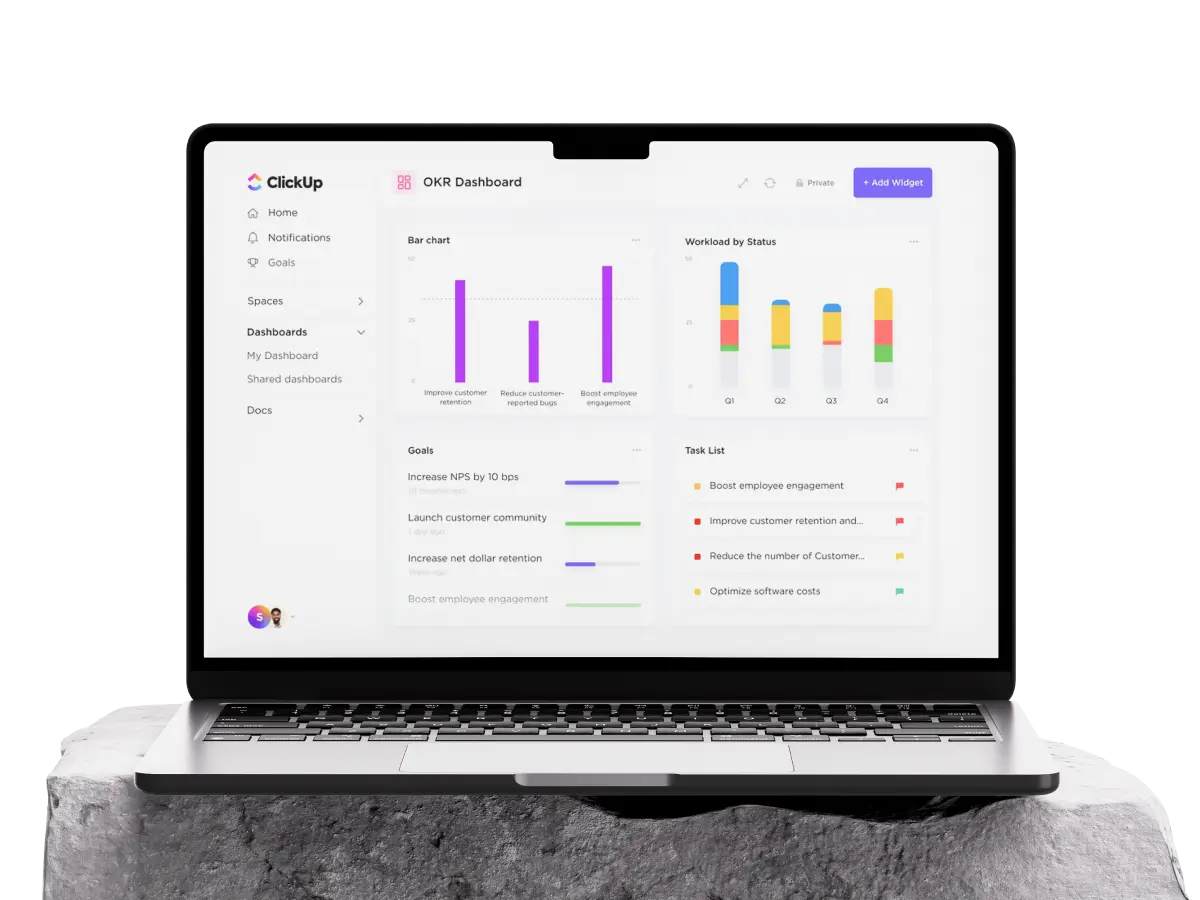
ClickUp: Scaling Global Productivity
Engineering high-performance backend integrations and scalable database architectures for a world-class productivity platform.
Susoft: POS Backend
Modernizing and scaling the backend infrastructure for a leading Norwegian SaaS provider of point-of-sale systems.

Apadua: Procurement SaaS
Reinventing enterprise procurement through modular, event-centric B2B marketplace engineering and evaluation platforms.
Full Spectrum
Solutions we deliver
Comprehensive backend development services engineered for performance and business scalability.
Custom API development & integration
Design and build secure, high-performance REST and GraphQL APIs with comprehensive documentation and enterprise-grade security.
Monolith-to-microservices migration
Incrementally decompose legacy monoliths into resilient, independently scalable microservices using the strangler fig pattern.
Real-time streaming backends
Architect low-latency event-driven systems using WebSockets, Redis Streams, and Apache Kafka for instant data propagation.
Payment processing engines
Integrate complex payment flows, subscription management, and multi-currency reconciliation with PCI-compliant architectures.
IoT data ingestion pipelines
Build scalable backends capable of processing large-scale concurrent telemetry streams from distributed IoT device networks.
Multi-tenant SaaS backends
Engineer isolated, scalable data architectures that support thousands of concurrent tenants with tenant-scoped RBAC and enforced data isolation.
Serverless function architectures
Optimize costs and scaling with event-driven serverless functions for background tasks, image processing, and webhook handling.
Legacy system modernization
Refactor and optimize outdated server-side codebases to modern runtimes, improving performance and developer velocity.
Power we added to our valued clients
60+
Backend systems delivered
99.99%
Average uptime achieved
<50ms
P99 API response time
10M+
Daily API calls handled
Case Study Snapshot
Deep dive into how we architected a backend development platform that redefined efficiency for NestHub Inc.
The Challenge
Synchronizing massive real-time MLS data feeds and managing complex disclosure document tracking across multiple agents and buyers.
The Innovation
Engineered ultra-fast API synchronization with optimized caching and specialized document management flows for disclosure tracking.
Quantifiable Impact
85%
Performance Lift
"Reduced manual document tracking steps for agents and gave buyers real-time visibility into disclosure status."
Read AllDelivery Excellence
Our Lean-Agile Methodology
A high-performance development roadmap engineered to minimize risk and maximize business value at every stage.
Analysis & Modeling
Deep dive into requirements, business logic modeling, and feasibility assessment.
POC & MVP Design
Rapid validation through Proof of Concepts or production-ready Minimum Viable Products.
The Engine
1-4 Week Sprints
Development & Re-engineering
Secure Release
Hardening, automated deployment, and production support monitoring.
Choose us because
Our Backend Development services are designed for you, your customers, and your business growth.
Domain-driven design methodology
12-factor app principles
Comprehensive API documentation
Automated security scanning
Performance load testing
24/7 monitoring & incident response
Backend Development FAQs
Questions about how we work, what to expect, or how we structure engagements? The answers most clients ask about, below.
Node.js/NestJS is ideal for real-time, I/O-heavy apps. Python/Django excels for data-driven APIs. Java/Spring is best for large enterprise systems. Go is perfect for high-concurrency microservices. We choose the right tool based on performance requirements, team expertise, and project constraints.
We implement multi-layered security: OAuth 2.0/OIDC for authentication, JWT with short-lived tokens, RBAC/ABAC for authorization, rate limiting, input validation, SQL injection prevention, and automated OWASP vulnerability scanning in CI/CD.
Yes. We use the strangler fig pattern to incrementally decompose monoliths into microservices, starting with the highest-value domain boundaries. This approach minimizes risk and allows gradual migration without service disruption.
Through circuit breakers, retry policies, health checks, blue-green deployments, chaos engineering, comprehensive monitoring (Prometheus/Grafana), and automated alerting. We target 99.99% uptime SLA.
Want to talk to a Mereb engineer?
Before any commercial conversation, we'll put you on a 30-min call with a senior engineer in your stack. No salespeople. Just a technical sanity check.
Tell us what you're working on.
We'll respond within one business day with the right next step.